
Bone Stress Injuries: Why “Shin Splints” Might Be Something More Serious
Key Takeaways
Shin pain should not always be dismissed as shin splints because persistent or localised pain may point to a bone stress injury.
Bone stress injuries happen when repeated impact exceeds the bone’s ability to recover and adapt.
Proper assessment helps identify whether shin pain is linked to training load, strength, biomechanics or recovery issues.
A structured rehab plan with gradual return to running is important for reducing flare ups and building long term confidence.
Shin pain is one of those injuries that many runners and active people try to push through. It often gets labelled as “shin splints”, followed by a bit of rest, some stretching, and a hopeful return to training. But if the pain keeps coming back, becomes more localised, or starts to affect walking, jumping, or running confidence, it may be time to look deeper. Arunning analysis assessment can help identify whether your shin pain is linked to load, strength, biomechanics, or something more serious like a bone stress injury.
Not all shin pain is the same. Some cases are manageable with early load modification and strength work. Others may be a sign that the bone itself is struggling to tolerate repeated impact. Understanding the difference matters because the right plan can help you recover properly, avoid guesswork, and return to running or sport with more confidence.
What Are Bone Stress Injuries?
A bone stress injury occurs when repeated loading on a bone exceeds its ability to repair and adapt. Bone is living tissue. It responds to training by breaking down and rebuilding, just like muscles and tendons. When the balance between loading and recovery is right, this process helps the bone become stronger over time.
Problems start when the load is too much, too soon, or too frequent for the bone to handle. This can happen with sudden increases in running volume, extra speed sessions, more hills, harder surfaces, or returning quickly after a break. If the bone does not have enough time or resources to repair, it can become irritated and overloaded.
Bone stress injuries exist on a spectrum. At the early end, there may be a bone stress reaction, where the bone is irritated but no fracture line is present. If the loading continues without proper management, it can progress into a stress fracture. The tibia, or shin bone, is one of the most common areas affected in runners and field sport athletes because it absorbs repeated impact during running, jumping, and change of direction.
Why “Shin Splints” Is Often Too Vague
“Shin splints” is a common term, but it does not tell us exactly what structure is causing the pain. Shin pain can come from muscle, tendon, fascia, the outer layer of bone, or the bone itself. That is why using one general label can sometimes lead to the wrong management plan.
Medial tibial stress syndrome, often called MTSS, usually refers to pain along the inside of the shin. It is often more diffuse and may feel like a broad ache along the lower leg. This can still be painful and frustrating, but it is not always the same as a bone stress injury.
A bone stress injury tends to be more concerning when the pain becomes more specific to one spot, worsens with impact, or lingers after activity. Symptoms can overlap, which is why assessment matters. The goal is not to scare every runner with shin pain, but to make sure persistent symptoms are not dismissed as “just shin splints” when they may need a different approach.
Shin Splints vs Bone Stress Injury: Key Differences
The difference between shin splints and bone stress injury is not always obvious from symptoms alone. However, some patterns can help guide whether further assessment may be needed.
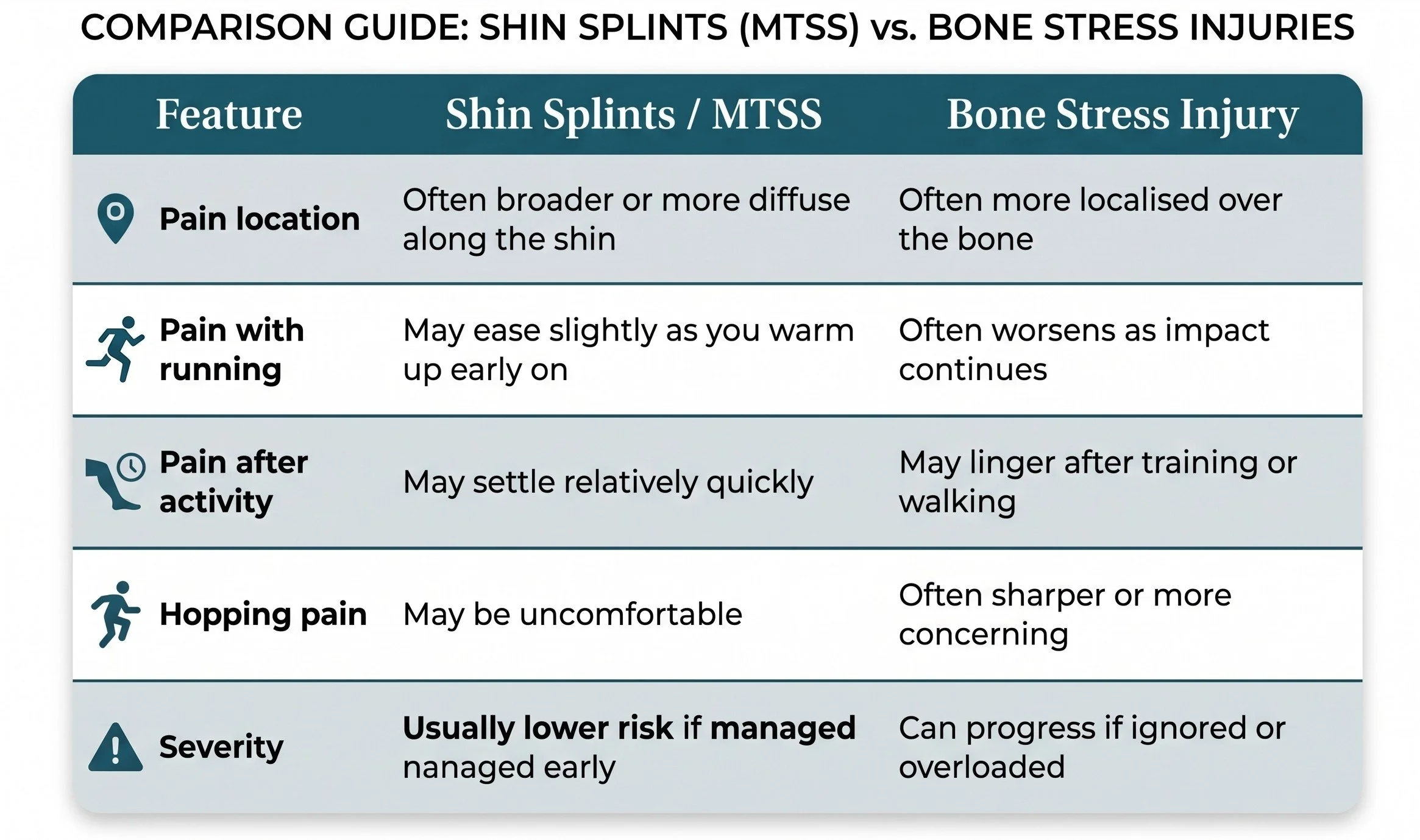
These differences are useful, but they are not a diagnosis. Some people with early bone stress injuries can still run for a period before the pain becomes obvious. Others may have symptoms that seem mild at first but become worse when training continues. If the pain is persistent, localised, or worsening, it is worth getting it checked.
Common Signs Your Shin Pain May Be More Serious
Not every case of shin pain is a stress fracture. However, certain symptoms suggest it is time to stop guessing and get a proper assessment. These signs are especially important if you are a runner, field sport athlete, triathlete, or someone who has recently increased impact-based training.
Watch for:
Pain that becomes more localised to one point on the shin
Pain that worsens during running, jumping, or impact
Pain that lingers after training or is felt during walking
Pain with hopping on one leg
Night pain or pain at rest
Shin pain that keeps returning despite rest or reduced training
These symptoms do not automatically mean you have a serious injury, but they are a signal that your shin pain needs more context. A physio can look at your training history, pain behaviour, strength, movement, and risk factors to help decide whether further imaging or medical input is needed.
Why Bone Stress Injuries Happen in Runners and Active People
Bone stress injuries usually happen when loading exceeds recovery capacity. This is why they are common in runners and athletes who perform repeated impact. The issue is not always that someone has poor technique or weak muscles. More often, it is a mismatch between what the body is being asked to tolerate and what it is currently prepared for.
Training errors are a major contributor. Sudden increases in weekly kilometres, extra interval sessions, hill running, harder surfaces, new shoes, or a quick return after illness or injury can all increase stress on the tibia. These changes may feel manageable at first, but bone often adapts more slowly than your fitness.
This is where understanding running load errors becomes important. A runner might feel aerobically fit enough to add more distance, but their bones, tendons, calves, and feet may not yet have the capacity to absorb the extra impact. When this happens repeatedly, shin pain can start to build.
Biomechanics can also play a role. Factors like step rate, overstriding, calf capacity, foot strength, hip control, and how your body manages impact can influence where load is distributed. But biomechanics should never be viewed in isolation. The same running pattern may be fine under one training load and problematic under another.
The Role of Training Load, Recovery and Energy Availability
Bone health depends on more than training structure. Recovery, sleep, nutrition, hormonal health, and overall stress all influence how well your body can adapt to impact.
Low energy availability is a key factor in bone stress injury risk. This happens when the body does not have enough energy left after training to support normal functions like bone repair, hormone regulation, immune function, and tissue recovery. It can affect athletes of any gender and any ability level, not just elite runners.
Under-fuelling may show up as ongoing fatigue, poor recovery, recurrent injuries, reduced performance, menstrual cycle changes, low libido, or feeling flat despite consistent training. These are signs that the body may not be coping with the total load being placed on it.
This is why a whole-person approach matters. If someone rests from running but returns to the same training structure, poor fuelling habits, limited strength capacity, and high life stress, the same issue may return. Proper management needs to consider the full picture, not just the sore shin.
How Bone Stress Injuries Are Diagnosed
Diagnosis starts with a detailed history and clinical assessment. A physio will ask about your symptoms, training load, recent changes, footwear, surfaces, previous injuries, recovery, sleep, nutrition, and goals. They will also assess pain location, tenderness, hopping tolerance, walking comfort, strength, and movement patterns.
If a bone stress injury is suspected, MRI may be recommended. MRI is commonly used because it can show early bone stress changes before a fracture line appears. It can also help grade the severity of the injury, which is important for deciding how much load needs to be reduced and how long the return-to-running process may take.
Some grading systems, such as the Fredericson classification, describe the severity of tibial bone stress injuries based on MRI findings. You do not need to know all the technical details, but the key point is this: not all bone stress injuries are equal. An early stress reaction may be managed differently from a more advanced stress fracture.
Getting clarity early can reduce the risk of doing too much too soon. It also helps build a more targeted plan, rather than relying on complete rest, random exercises, or trial-and-error running.
Why Rest Alone Usually Is Not Enough
Rest can calm symptoms, but it does not automatically fix the reason the injury developed. This is one of the biggest mistakes active people make with shin pain. They stop running for a few weeks, feel better, then return to the same training plan and experience the same pain again.
If the original contributors are still there, the injury can come back. These may include poor load management, inadequate calf strength, reduced foot or ankle capacity, limited hip control, sleep issues, under-fuelling, or a return-to-run plan that progresses too quickly.
This is especially important for runners who have recurring shin pain. The goal is not just to make symptoms settle. The goal is to build the capacity required to tolerate running again.
At Athletic Soul Rehab, this fits into the bigger picture of long-term recovery. We want you to understand why the injury happened, what your body needs to handle load better, and how to return to your sport or running goals in a structured way.
What Rehab Should Focus On Before Returning to Running
Rehab should always be matched to the severity of the injury and the person in front of us. A runner with an early shin irritation will not need the same plan as someone with an MRI-confirmed stress fracture. That said, most rehab plans will involve more than simply waiting for pain to disappear.
A strong return-to-running plan may focus on:
Rebuilding calf, foot, hip, and lower limb strength
Improving walking tolerance, hopping capacity, and impact readiness
Reviewing running volume, intensity, surfaces, and weekly structure
Addressing movement patterns, including step rate, overstriding, or hip control issues
Supporting recovery habits such as sleep, nutrition, and training balance
Strength training is often a key part of rehab because it helps improve tissue capacity. Calf strength, foot control, hip stability, and lower limb strength all help the body absorb and distribute impact more effectively. For some runners, technique cues may also be useful, but they should be simple, targeted, and based on what the assessment shows.
Return to running should be gradual. It often starts with walking tolerance, then controlled impact drills, then short run-walk intervals. Progress should be based on symptoms, recovery response, and confidence, not just a calendar date.
When Should You See a Physio for Shin Pain?
You should consider seeing a physio if your shin pain is persistent, worsening, localised, or repeatedly returns when you increase running. It is also worth getting assessed if the pain affects walking, hopping, sport, or your confidence to train.
Early assessment can help you avoid the common cycle of resting, returning, and flaring up again. It can also help determine whether your pain is more likely related to medial tibial stress syndrome, muscle overload, tendon irritation, or a possible bone stress injury.
A physio can help you make better decisions about whether to reduce running, modify training, start strength work, seek imaging, or progress back into sport. The earlier you understand what is happening, the easier it is to build a plan that actually matches the problem.
Get Persistent Shin Pain Properly Assessed
Shin pain is common, but it should not always be dismissed as “just shin splints.” If your symptoms are persistent, localised, worsening with impact, or not improving despite rest, there may be more going on than a simple overuse niggle.
A running analysis assessment can help identify the factors contributing to your shin pain, including training load, strength, movement patterns, biomechanics, recovery, and running goals. At Athletic Soul Rehab, we look beyond the painful area to understand why the issue developed and what your body needs to return to running with confidence.
Whether you are training for an event, returning from injury, or tired of shin pain interrupting your progress, getting the right assessment can help you move forward with a clearer plan. Book an appointment with Athletic Soul Rehab and take the next step towards stronger, smarter, and more sustainable running.